





Sustainability & Responsible Delivery
Practical steps to reduce the environmental impact of our event coffee service.
From coffee sourcing and serviceware to transport, equipment and waste, we're working to understand where our biggest impacts lie and make improvements we can document and measure.
A practical approach to sustainability
Event coffee has an environmental impact. Coffee has to be grown, processed and roasted; equipment and people need to reach the venue; water and energy are used during service; and cups, lids and other consumables need to go somewhere afterwards.
Our approach is to look at those practical parts of the service and make improvements we can document, review and build on.
We have not yet calculated a complete organisational greenhouse-gas footprint, so we don't currently describe Social Espresso or our events as net zero or carbon neutral. Instead, we're focusing on what we can demonstrate today while improving the data we need to understand our impact more accurately in future.
Traceable coffee sourcing
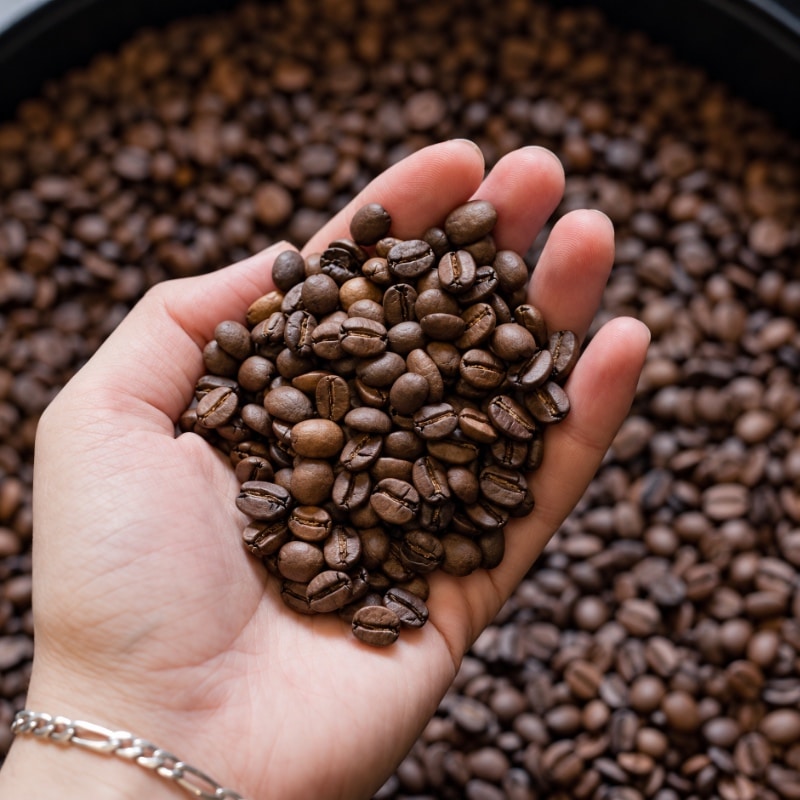
All coffee currently served at Social Espresso events is supplied by Elsewhere Coffee and sourced from Mió in Monte Santo de Minas, Brazil. This gives us traceability through our supplier to the producer, with supplier and purchasing records retained for the coffee we buy.
We prefer to be specific about what we know rather than make broad claims about one sourcing model being inherently better than another. Where comparisons such as producer payments are made in future, we'll only publish them where we have comparable figures for a named crop, period and relevant benchmark.
You can read more about our coffee and sourcing.
Reducing waste and increasing reuse
We use cups, lids and serviceware that our current suppliers document as suitable for industrial composting. That distinction matters: these materials only deliver the intended benefit where the correct commercial waste stream exists, and they shouldn't simply be assumed to have been composted after an event.
Before an event, we ask the organiser or venue what waste facilities are available and how used serviceware should be separated. Where industrial composting isn't provided, we follow the venue's stated waste system rather than claiming that the items have been composted.
Reuse is built into other parts of our operation too. We use refillable water tanks and sealable, reusable coffee buckets, while our coffee bars, machines and other core event equipment are maintained for repeated use.
Within the office, routine administration is handled digitally and eligible employees can also take part in our cycle-to-work reward scheme.
Smarter event transport
Transport is an unavoidable part of a mobile event service, particularly when coffee bars, machines, stock and teams need to reach several venues within the same period.
We plan routes, consolidate equipment and supplies into loads, and coordinate deliveries and collections to reduce avoidable journeys wherever practical.
We don't currently claim that all London event deliveries use electric vehicles. Instead, we're improving the mileage and fuel data we collect so that transport can form part of a properly measured emissions baseline in future.
Our Ecologi contribution
Social Espresso maintains a monthly business plan with Ecologi, supporting climate action outside our own operations.
We regard this as an additional contribution rather than a substitute for understanding and reducing our own impact. We therefore don't use the Ecologi plan to describe Social Espresso, or an individual event, as carbon neutral, net zero or emissions-free.
What we're measuring next
The next step is to improve the activity data we collect so we can understand where the largest impacts within our operation are actually coming from.
This includes:
- vehicle mileage and fuel used for events;
- freight, shipping and business travel, including European events;
- electricity and other energy used at our premises and for coffee roasting;
- coffee and milk volumes used at events;
- cups, lids and other serviceware purchased; and
- waste destinations where venues are able to provide that information.
This is still a data-gathering stage rather than a complete Scope 1, Scope 2 and Scope 3 greenhouse-gas footprint. We won't set or advertise a new net-zero target until we have a measured baseline and a reduction plan we can stand behind.
Keeping our claims accountable
We retain supplier, purchasing and operational records for the sustainability statements we publish and review them if a supplier, operating practice or supporting record changes.
Our sustainability information is reviewed annually, with the next scheduled review due in September 2027. If you have a procurement or sustainability question about a particular statement or event, please contact us and we'll provide the information we have available.
Planning a more responsible event with us
Some of the environmental impact of an event depends on decisions made before we arrive, and good information from the venue or organiser helps us plan the service more effectively.
Accurate guest numbers, service times and drinks requirements also help us bring appropriate quantities of coffee, milk and consumables and plan deliveries more efficiently.
We can also work with venues, organisers and other event suppliers where practical event requirements such as power, access or waste arrangements need to be confirmed in advance.
Fields with an asterisk * are required

Frequently Asked Questions
Is Social Espresso net zero?
No. We have not yet calculated a complete organisational greenhouse-gas footprint and therefore don't currently describe Social Espresso or our events as net zero or carbon neutral.
We are improving the operational data we collect before setting any new net-zero target or publishing claims based on a full emissions baseline.
Are your coffee cups and lids compostable?
We use cups, lids and serviceware that our current suppliers document as suitable for industrial composting.
Industrial composting requires the correct commercial waste stream, so before an event we ask the venue or organiser what facilities are available and how used serviceware should be separated. Where industrial composting isn't available, we follow the venue's stated waste arrangements.
Do you use electric vehicles for event deliveries?
We don't currently claim that all event deliveries in London or elsewhere use electric vehicles.
We plan routes, consolidate equipment and supplies where practical, and are improving the mileage and fuel data we collect so that transport can be properly included in future emissions measurement.
Does Social Espresso offset its carbon emissions?
Social Espresso maintains a monthly business plan with Ecologi, which supports climate action outside our own operations.
We treat this as an additional contribution rather than an offset that would allow us to describe the business or an event as carbon neutral, net zero or emissions-free.
What can event organisers do to help reduce waste?
Let us know what waste streams are available at the venue, whether industrial composting is provided and how cups, lids and other serviceware should be separated.
Accurate guest numbers and service requirements are also helpful, as they allow us to plan quantities, equipment and deliveries more closely around the event rather than bringing more than is reasonably required.